Minihaus
Project Title: Minihaus
Components: Printed Activity Book, Wooden Dollhouse, Stickers, Packaging, Wrapped Crayons
Software Used: Adobe Illustrator, Adobe InDesign
Typefaces Used: P22 Toybox, Mr. Eaves
Team: Myself, Ashton Crochet, Rhena Johnson, Kennedy Roush
My Roles: Book design, Case study design, copy writing
My team and I were tasked with creating a physical object geared toward children and centered around a specific design philosophy. Our philosophy was drawn from the Bauhaus and Swiss Design movement, hence the project’s name. It’s based on the principle that to fully understand something, a designer needs to break it down into its most fundamental components. Our product reflects this visually through its focus on geometry and its primary color scheme. The house itself is an educational tool to teach children about the Gestalt principles, which are the most fundamental concepts in design. The activity book serves as an interactive element.
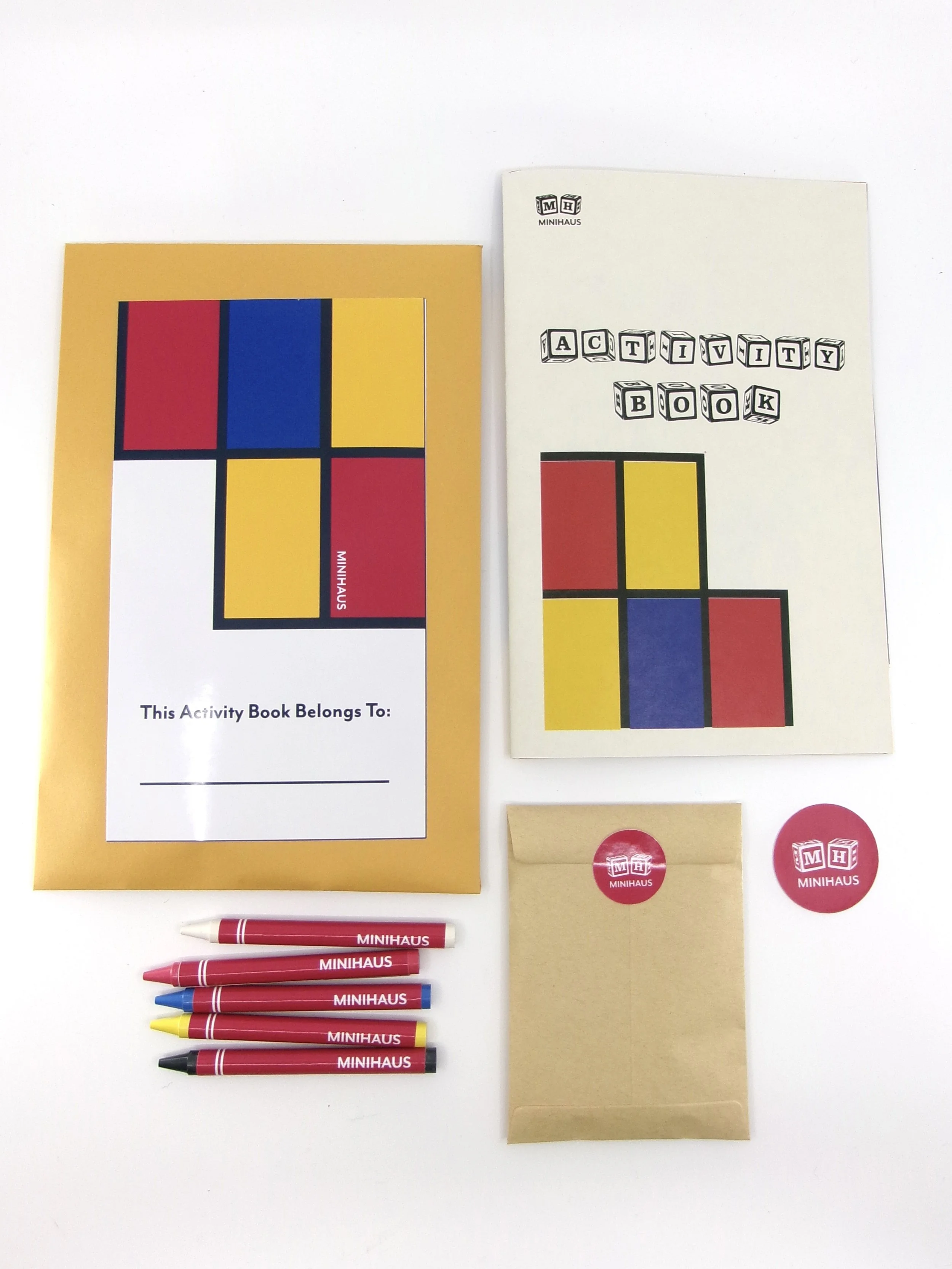
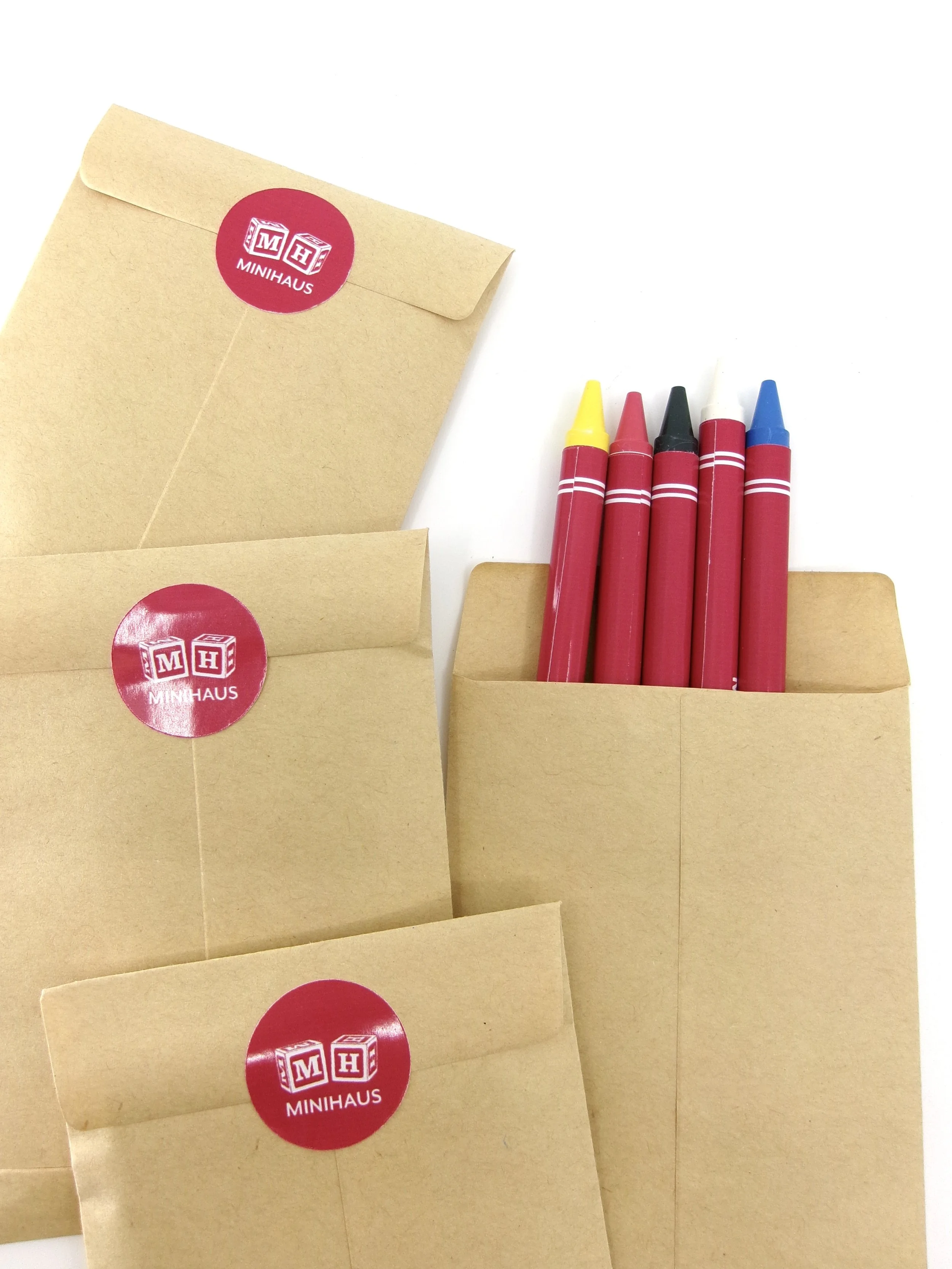
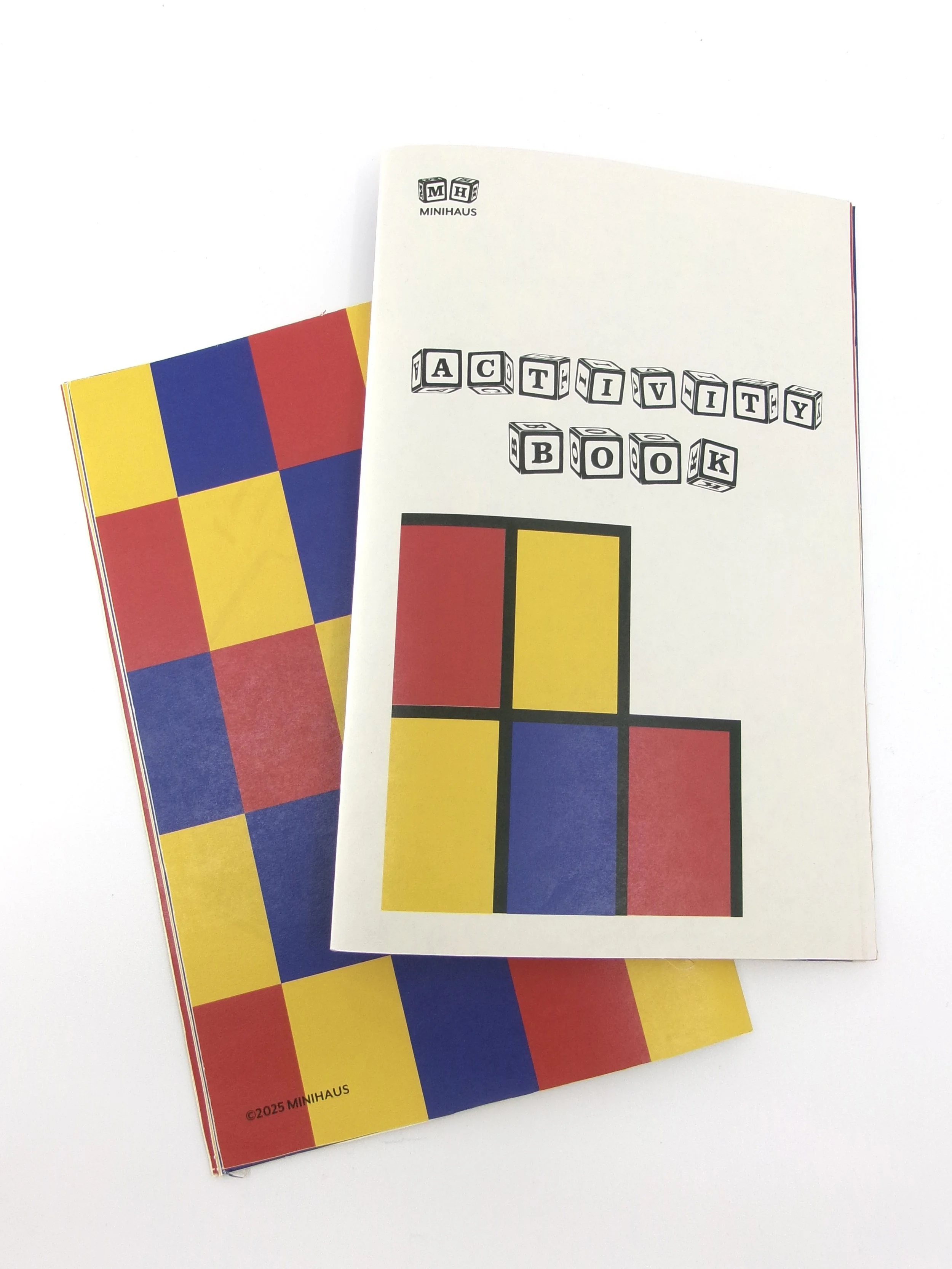
The activity book is packaged inside a manila envelope with a set of crayons. Teachers would be able to order sets of the books online - one book per student - and have them mailed in.
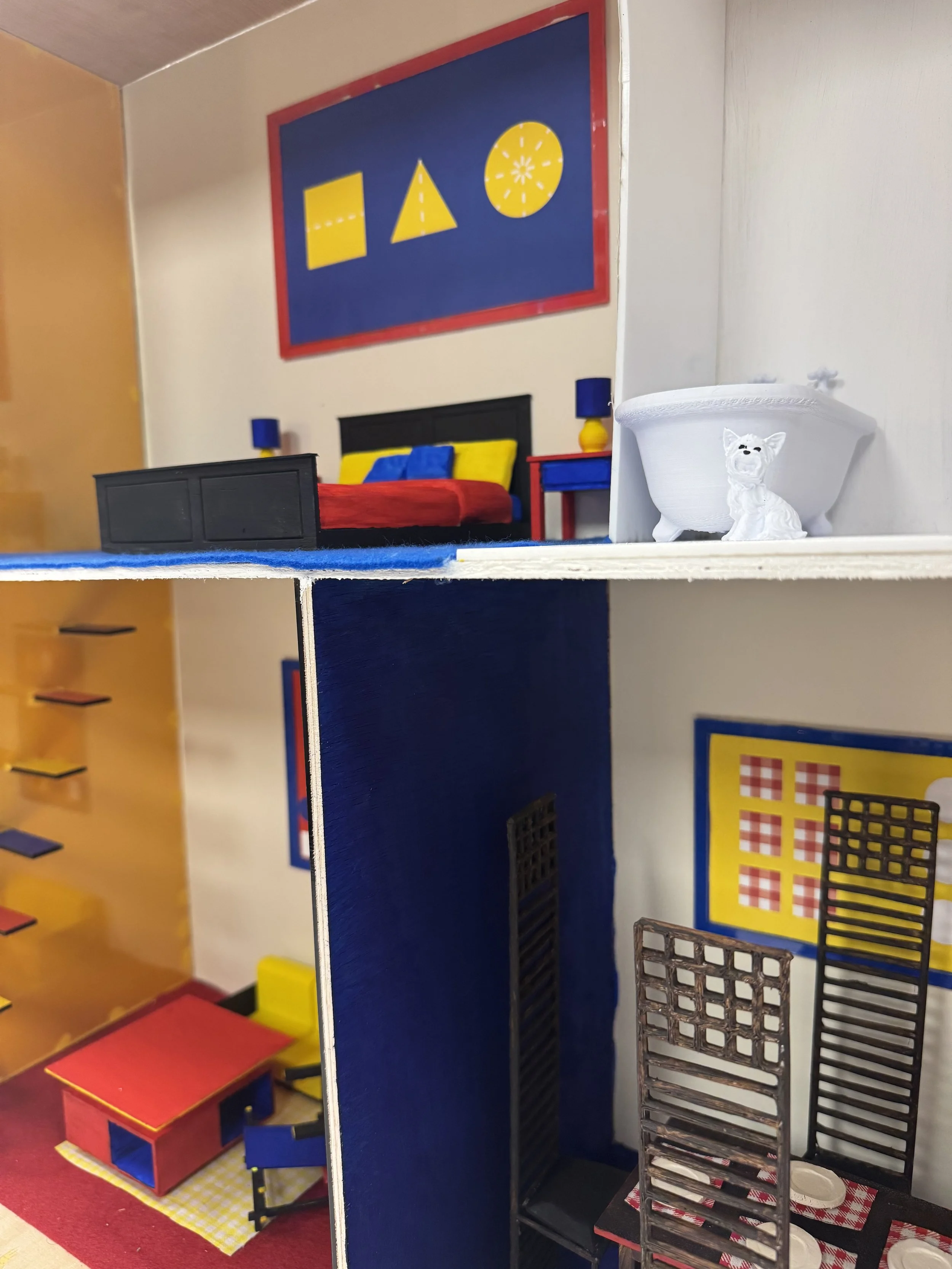
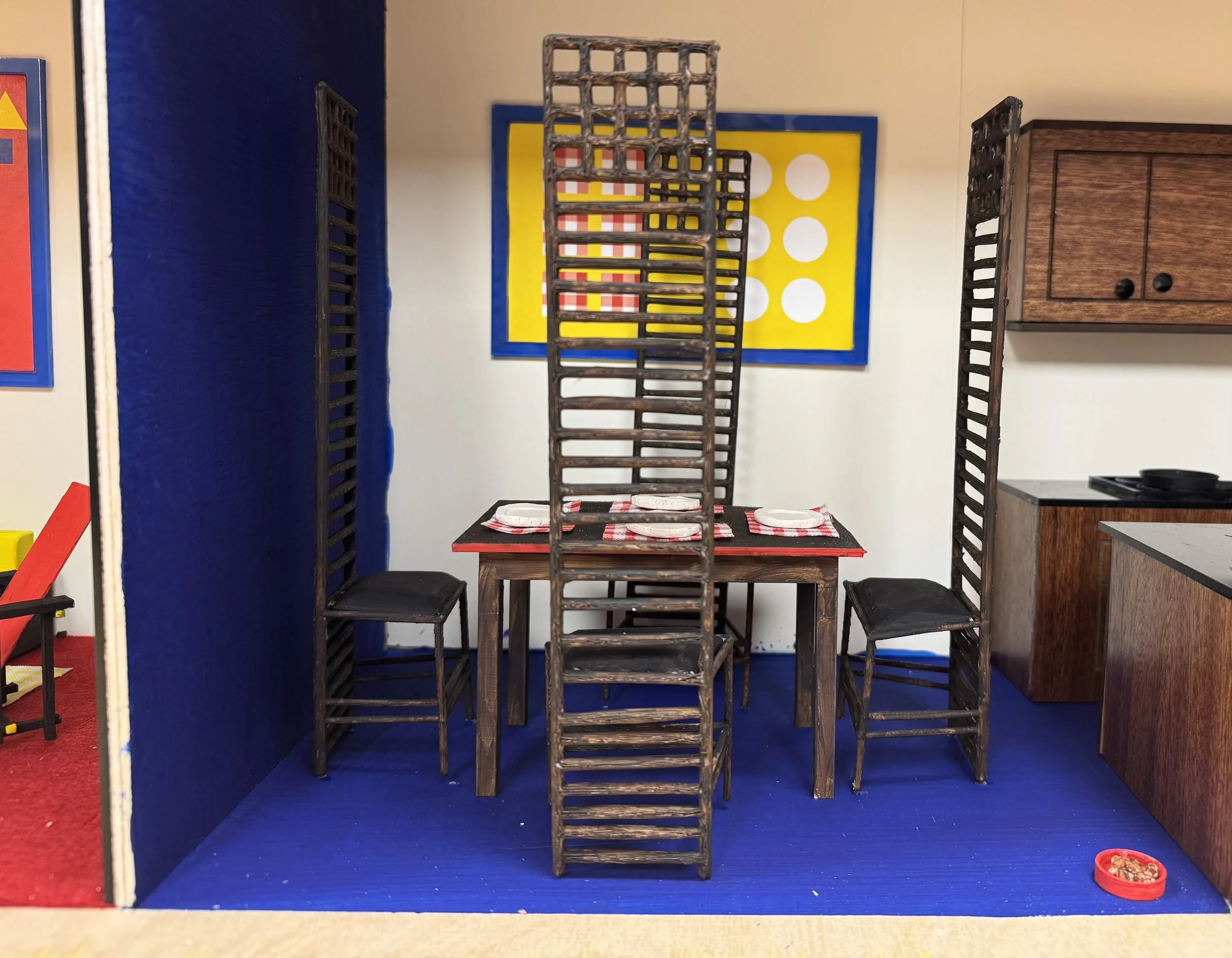
The house itself was also a core component of the project; each room corresponds to a different Gestalt principle. The dining room, for example, shows Similarity due to the repetition of chairs and plates.
Each room contains a ‘painting’ on the wall which also showcases its corresponding principle.
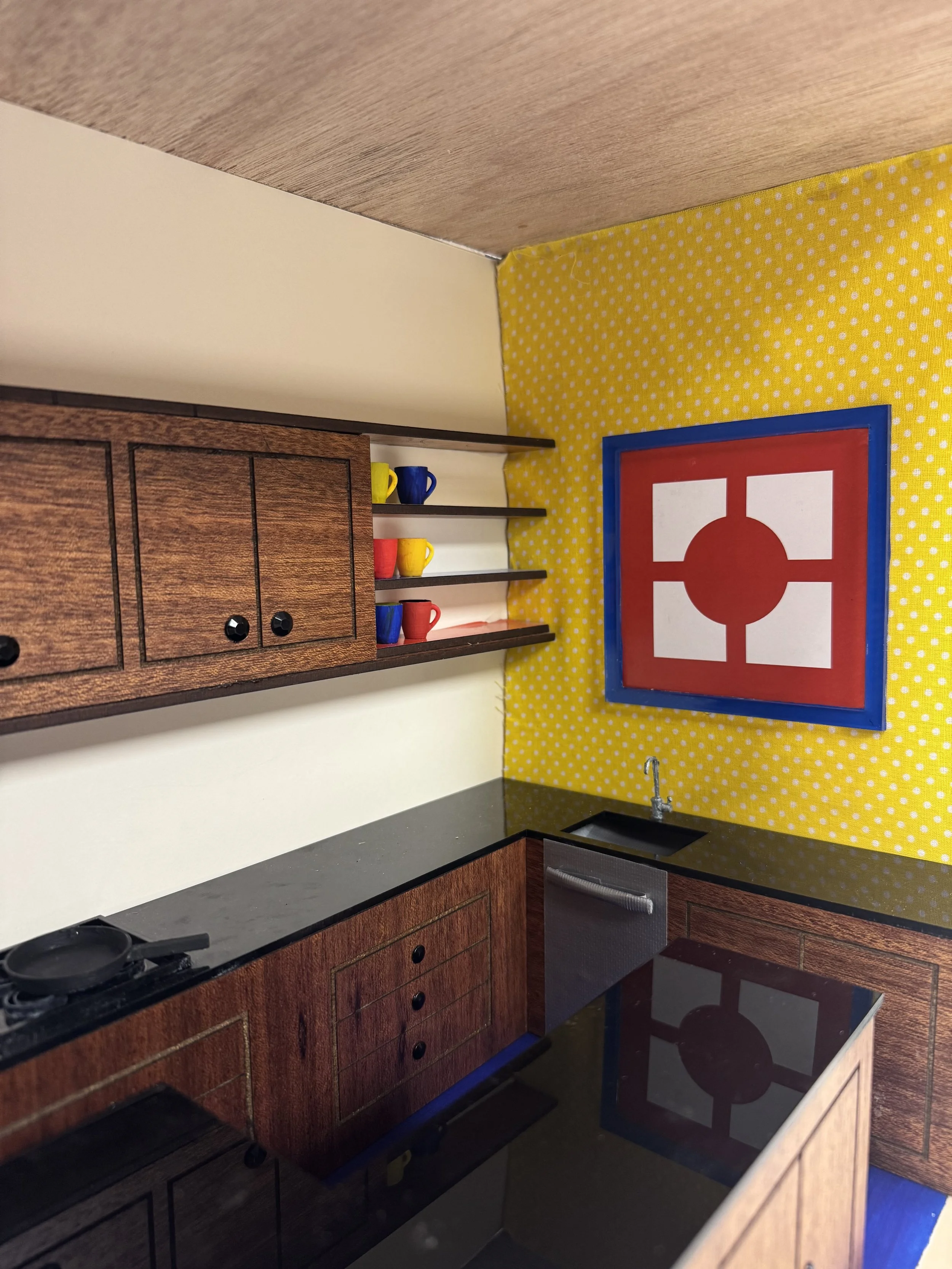
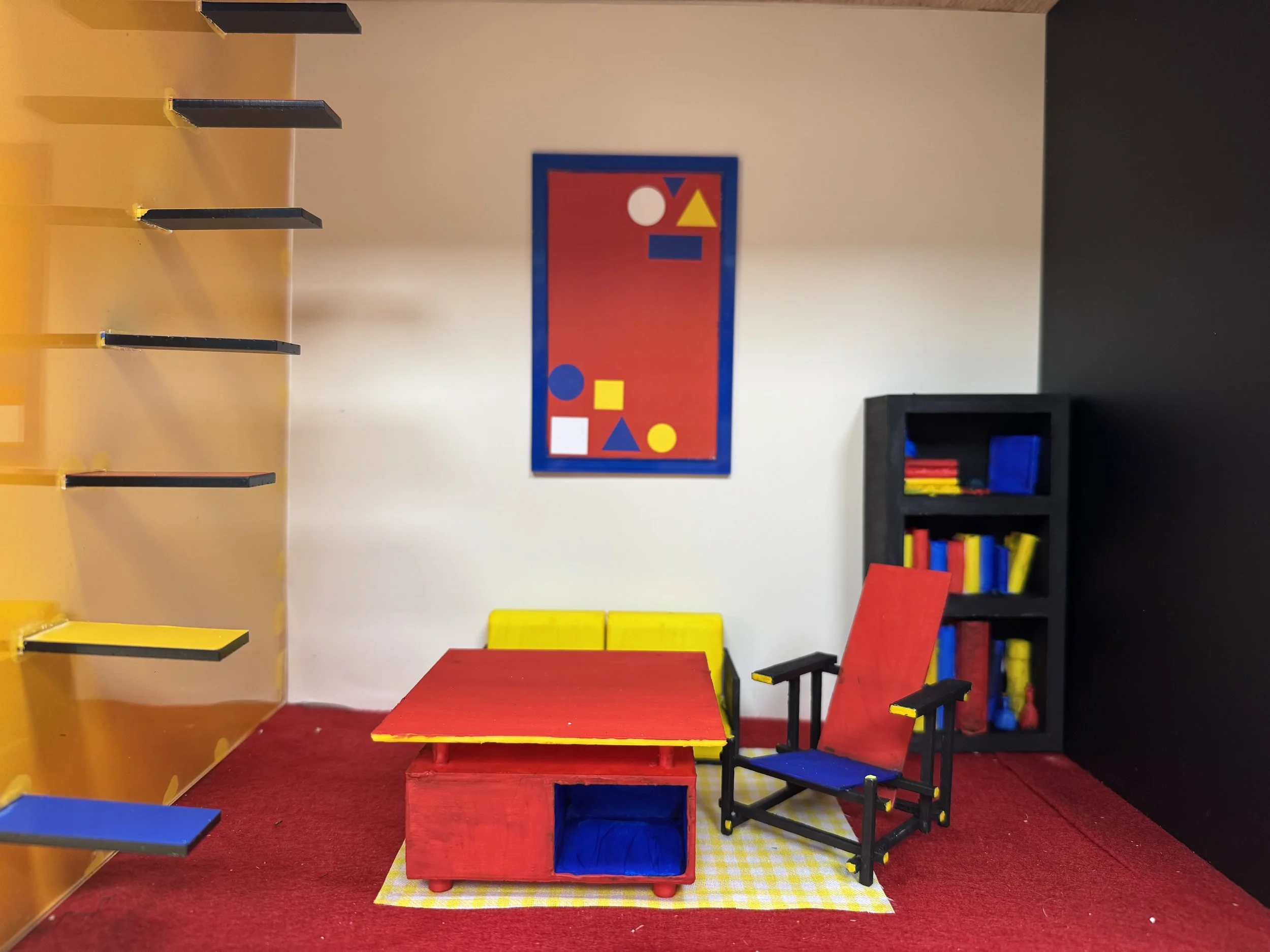
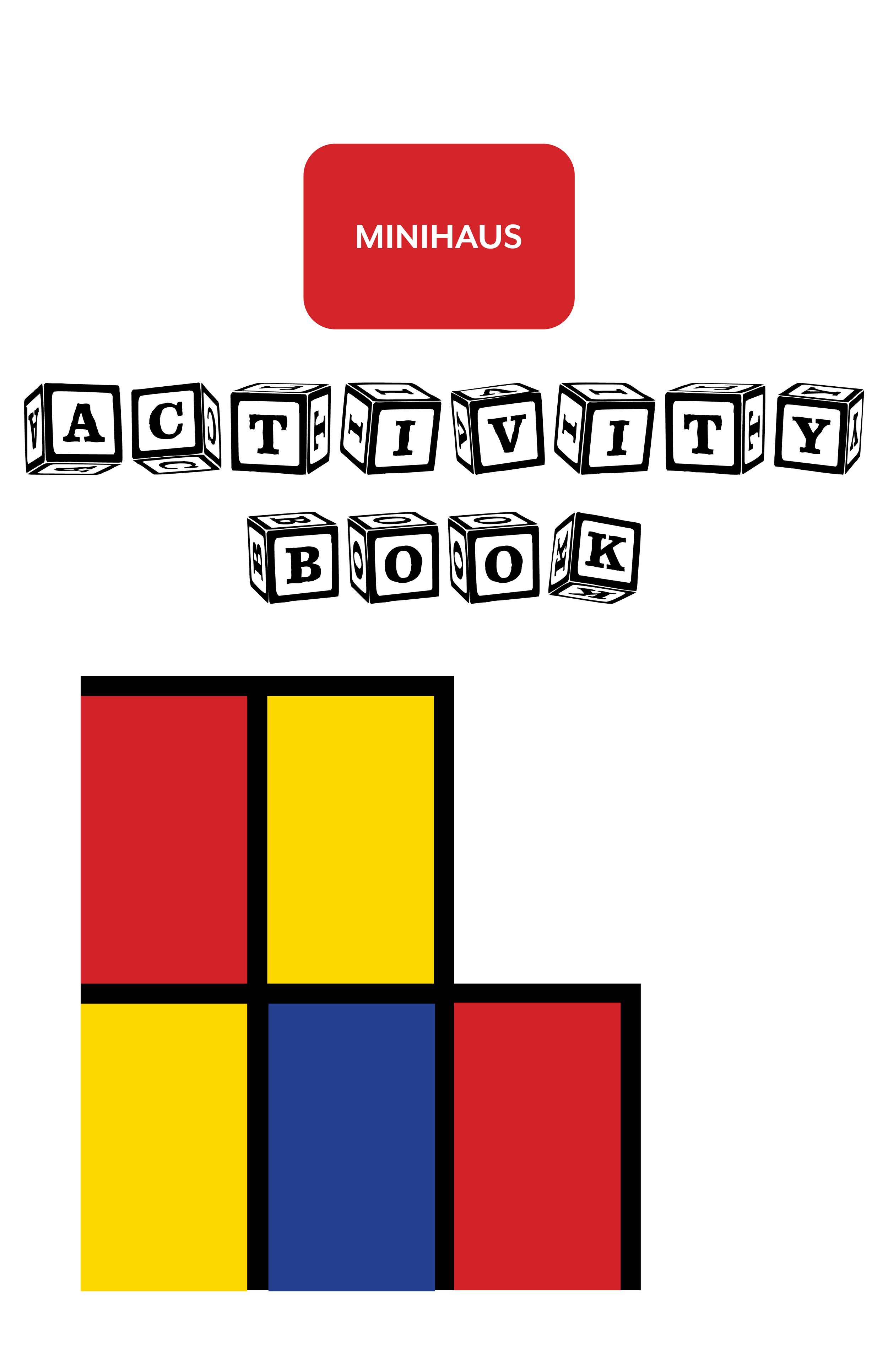
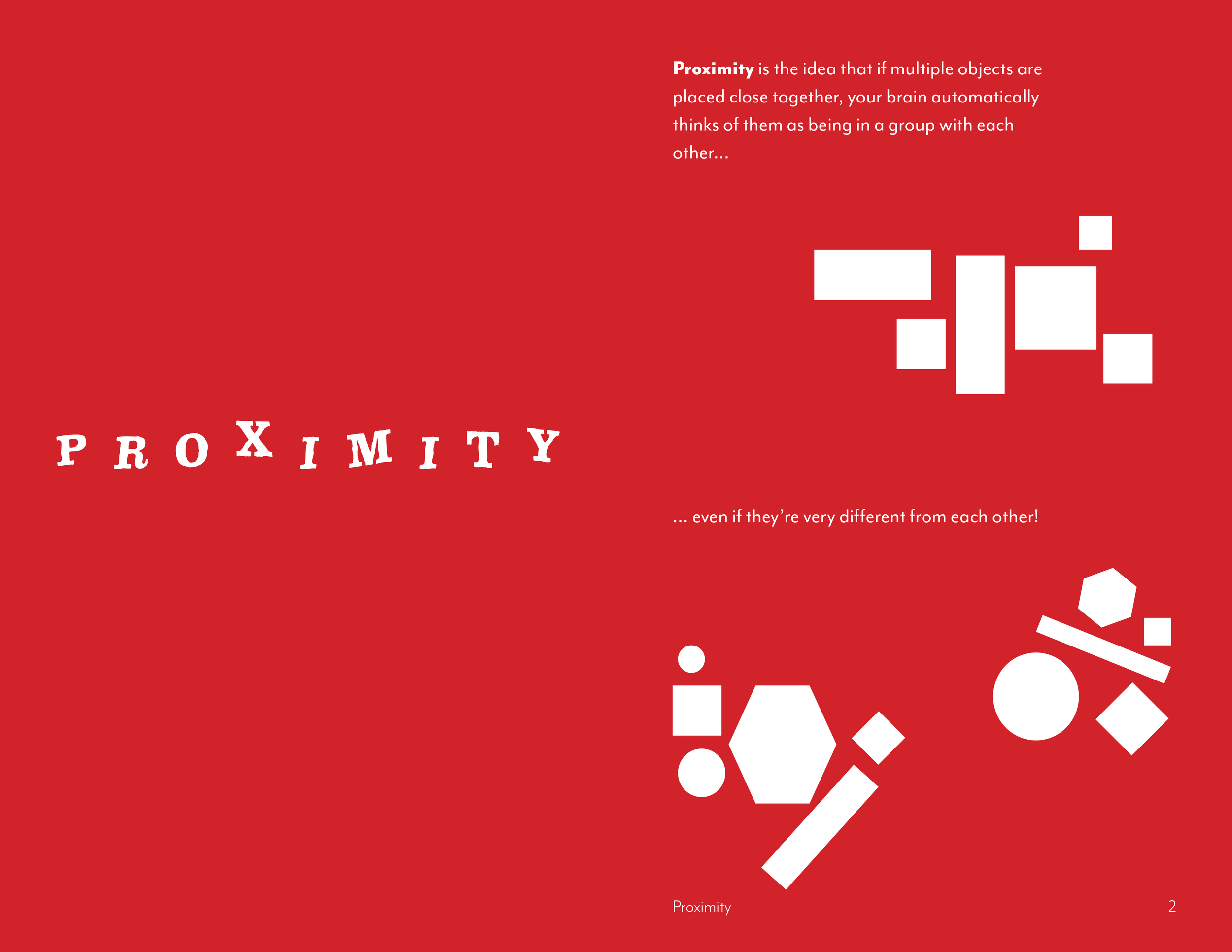
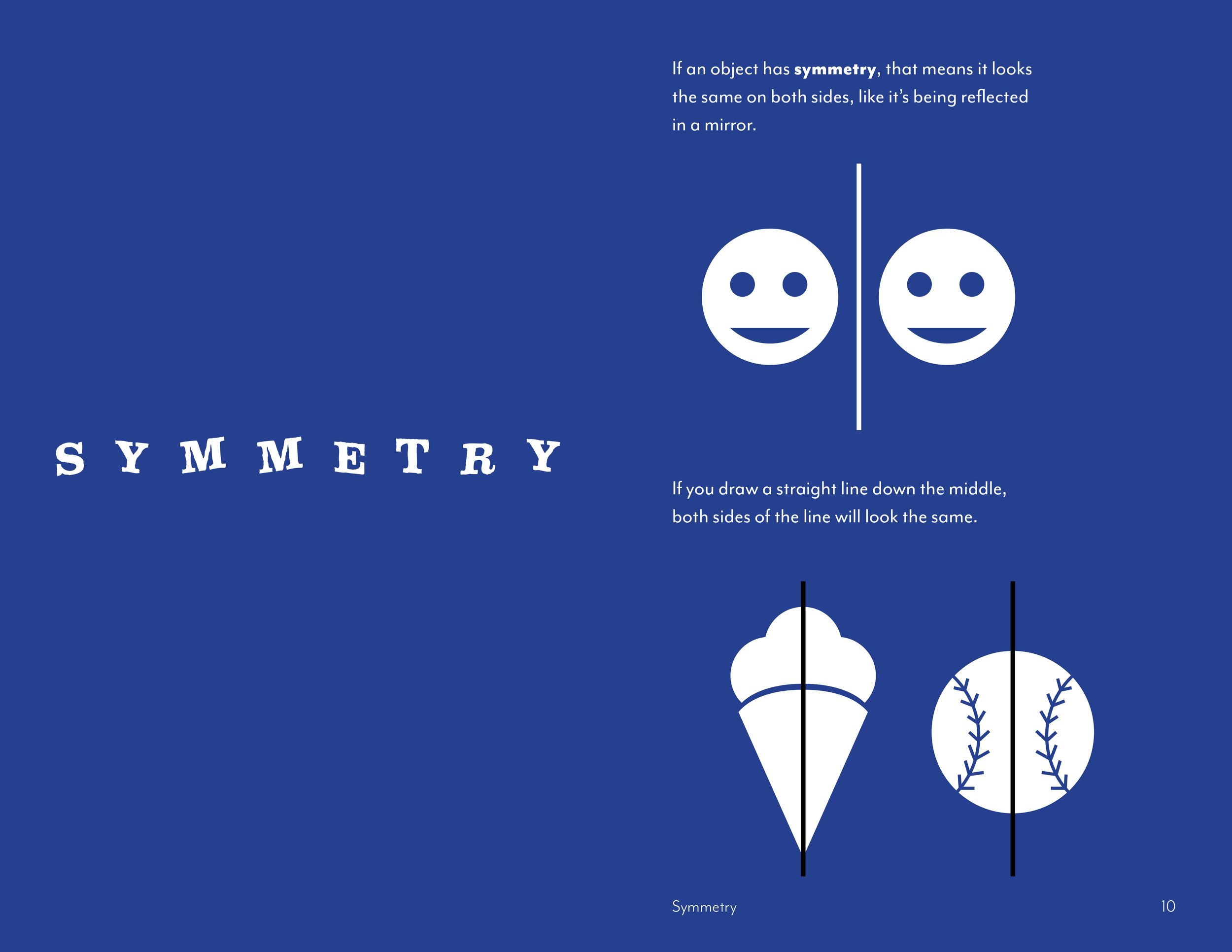
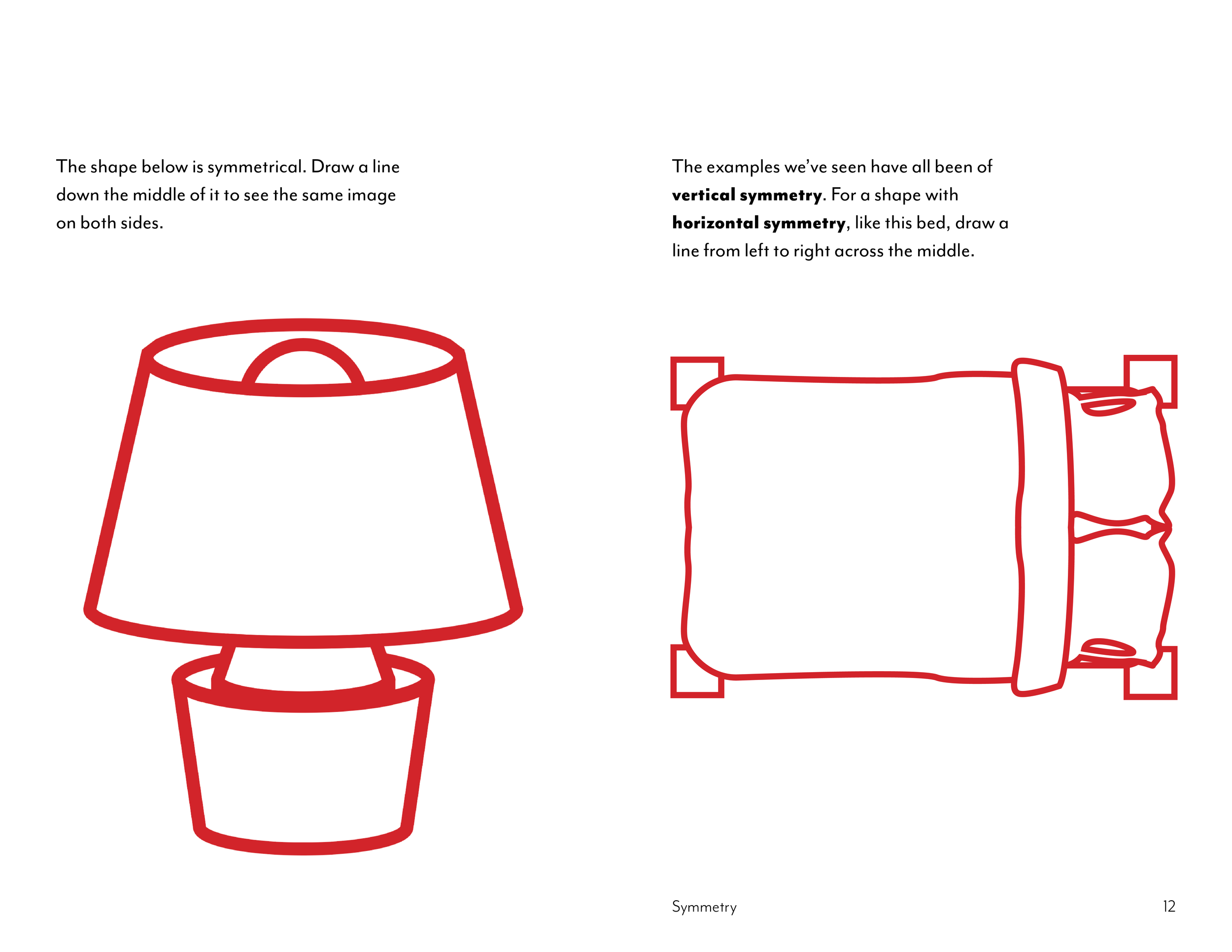
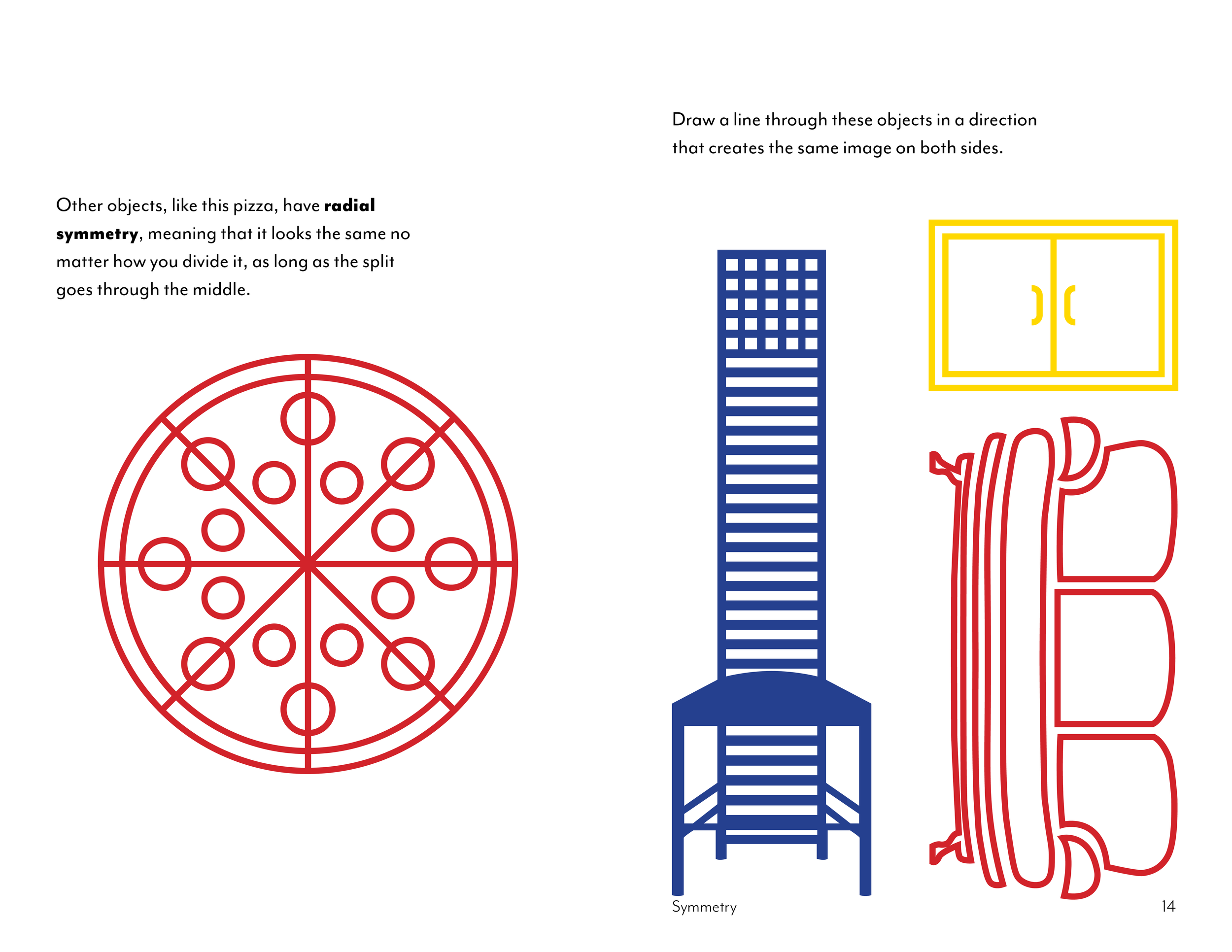
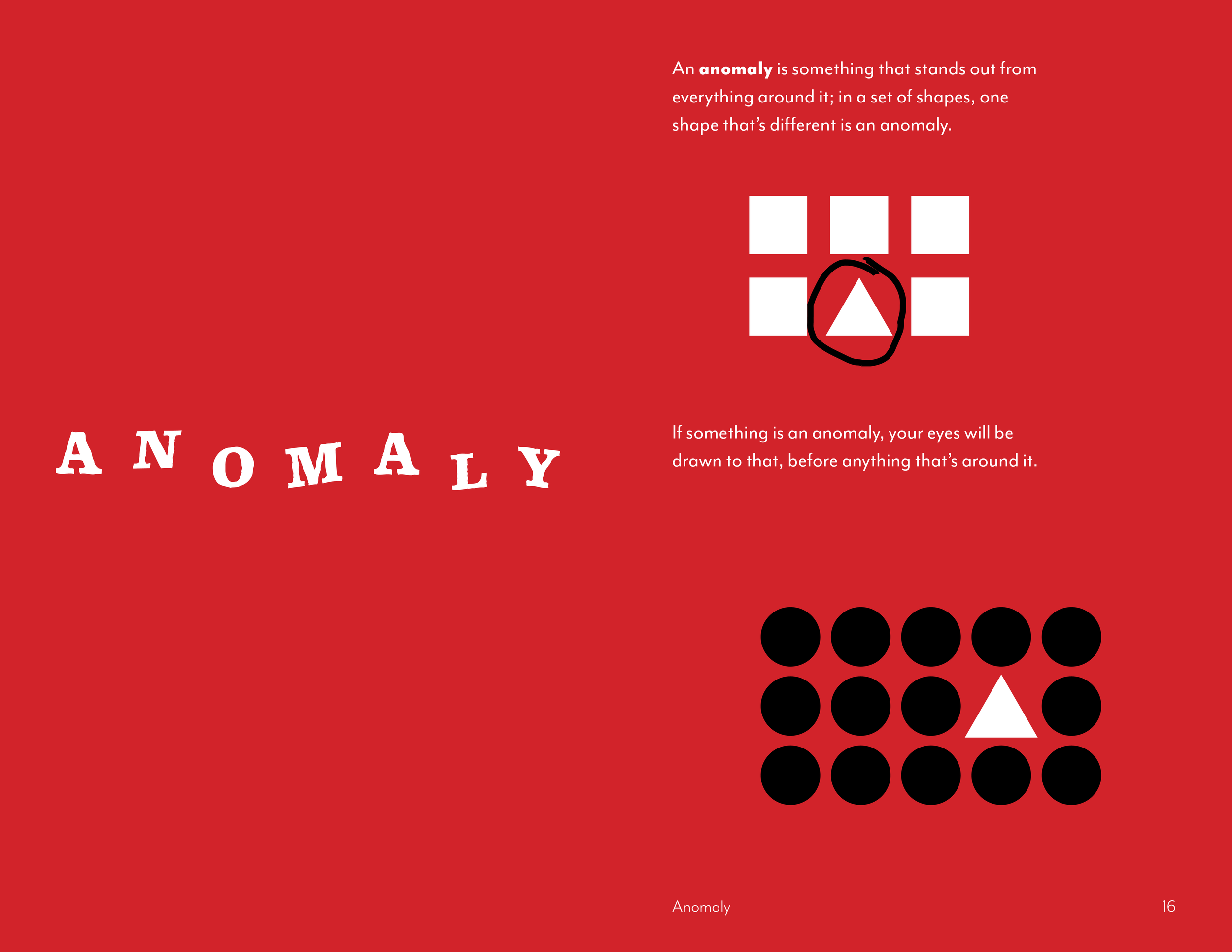
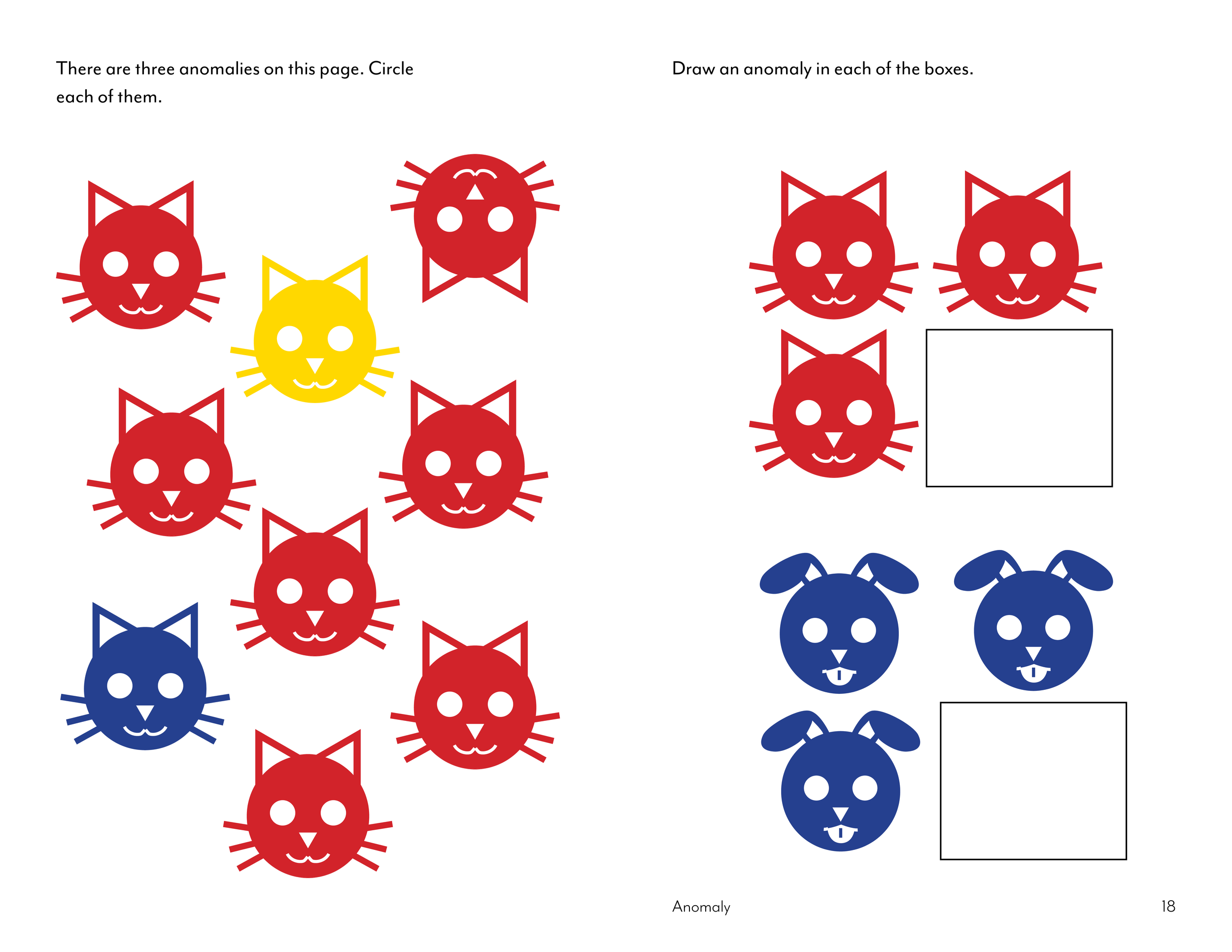
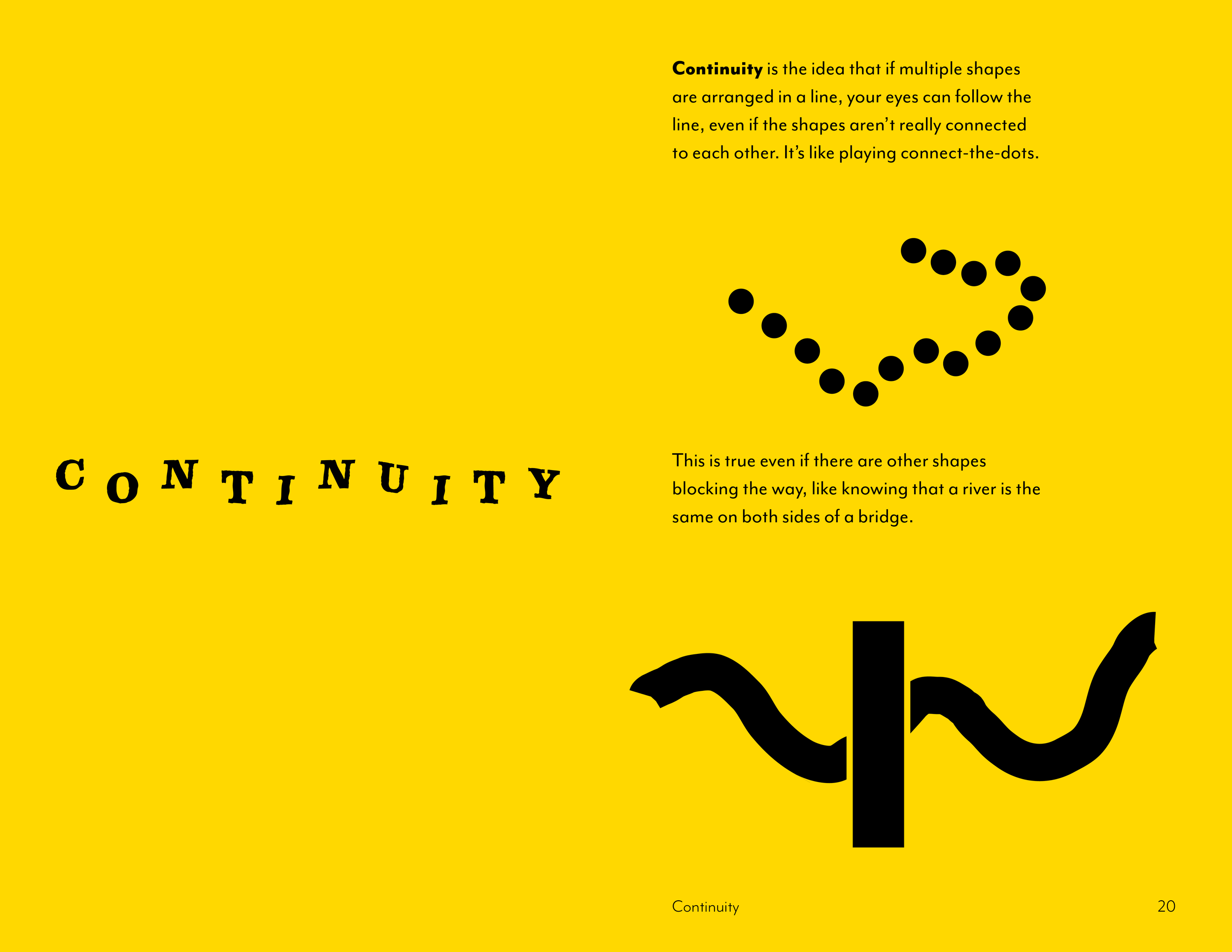
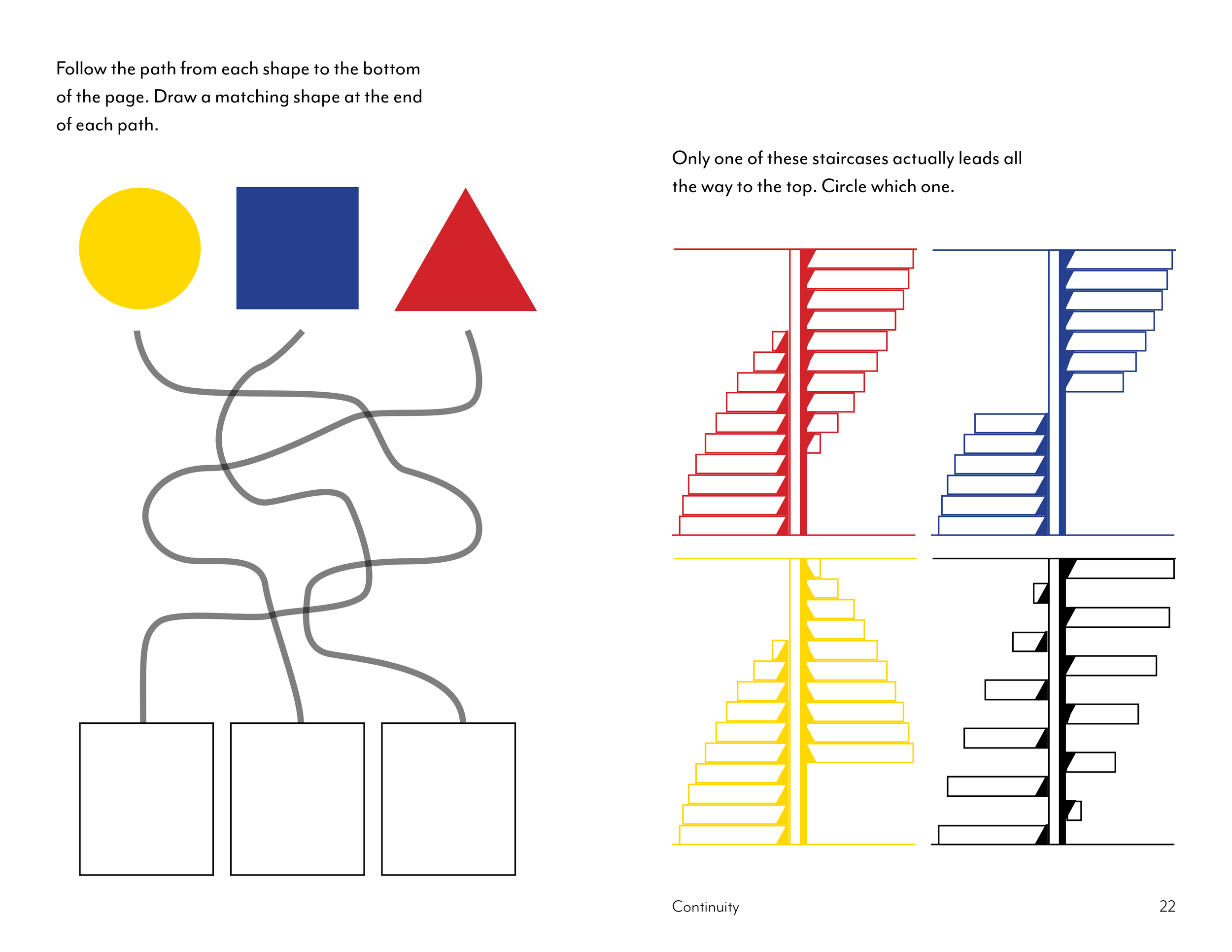
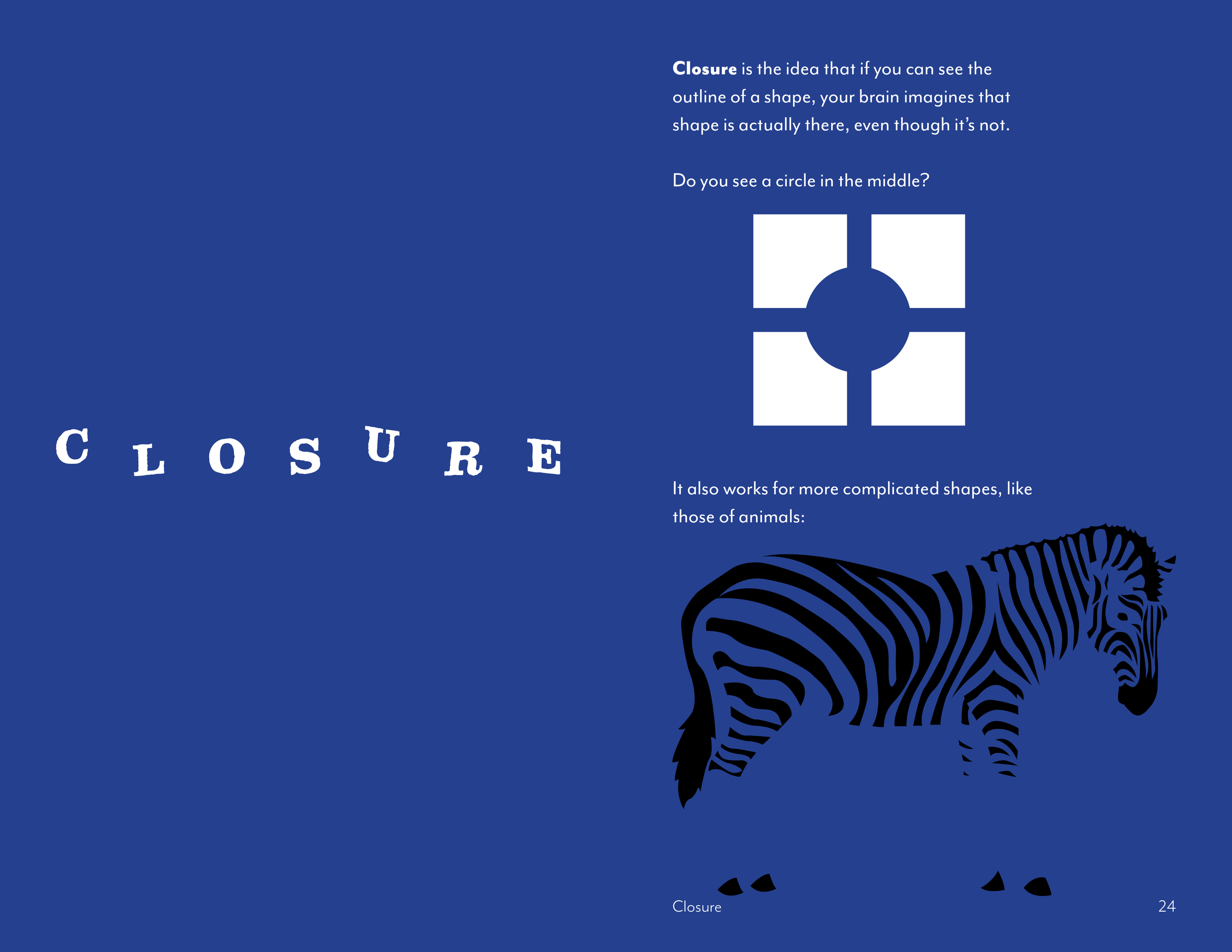
The activity book is divided into six sections, each corresponding to a different Gestalt principle. Each section opens with a brief explanation of its principle, followed by one or two spreads of activities allowing the students to use it in practice.
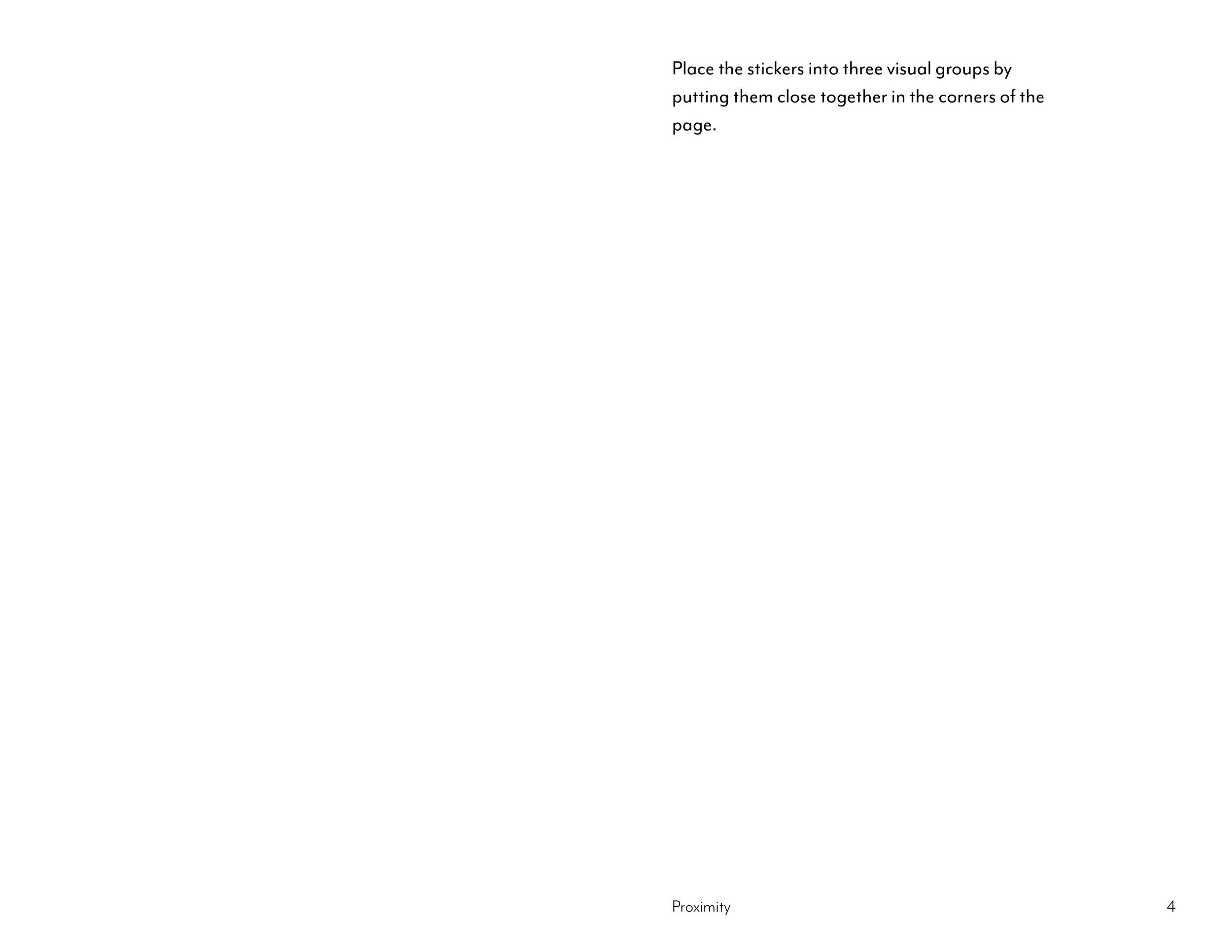
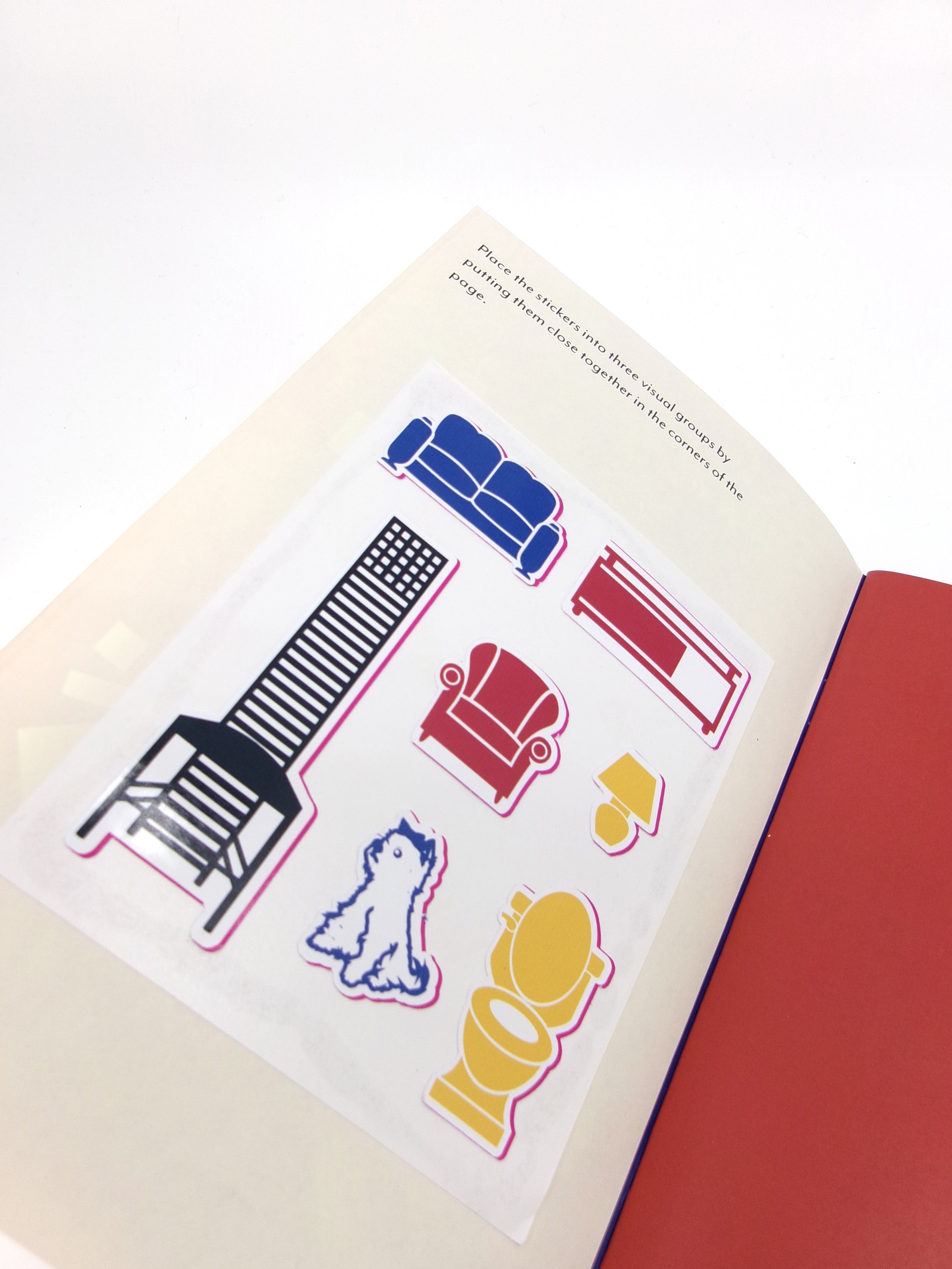
This spread is mostly blank to allow space for a sticker sheet, which students would use to arrange stickers on the page according to proximity.
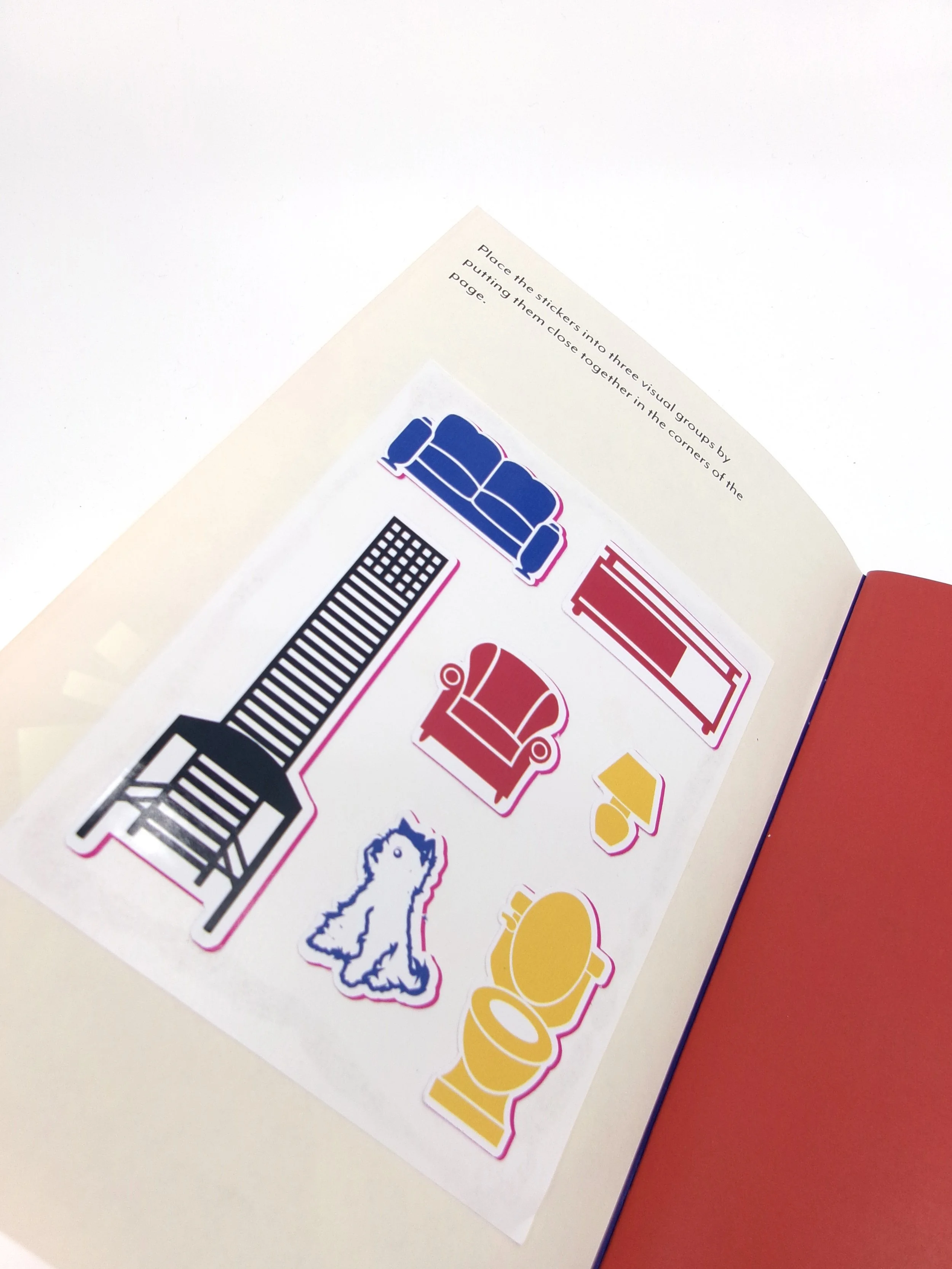
Shown above is the final version of this spread with the stickers included.
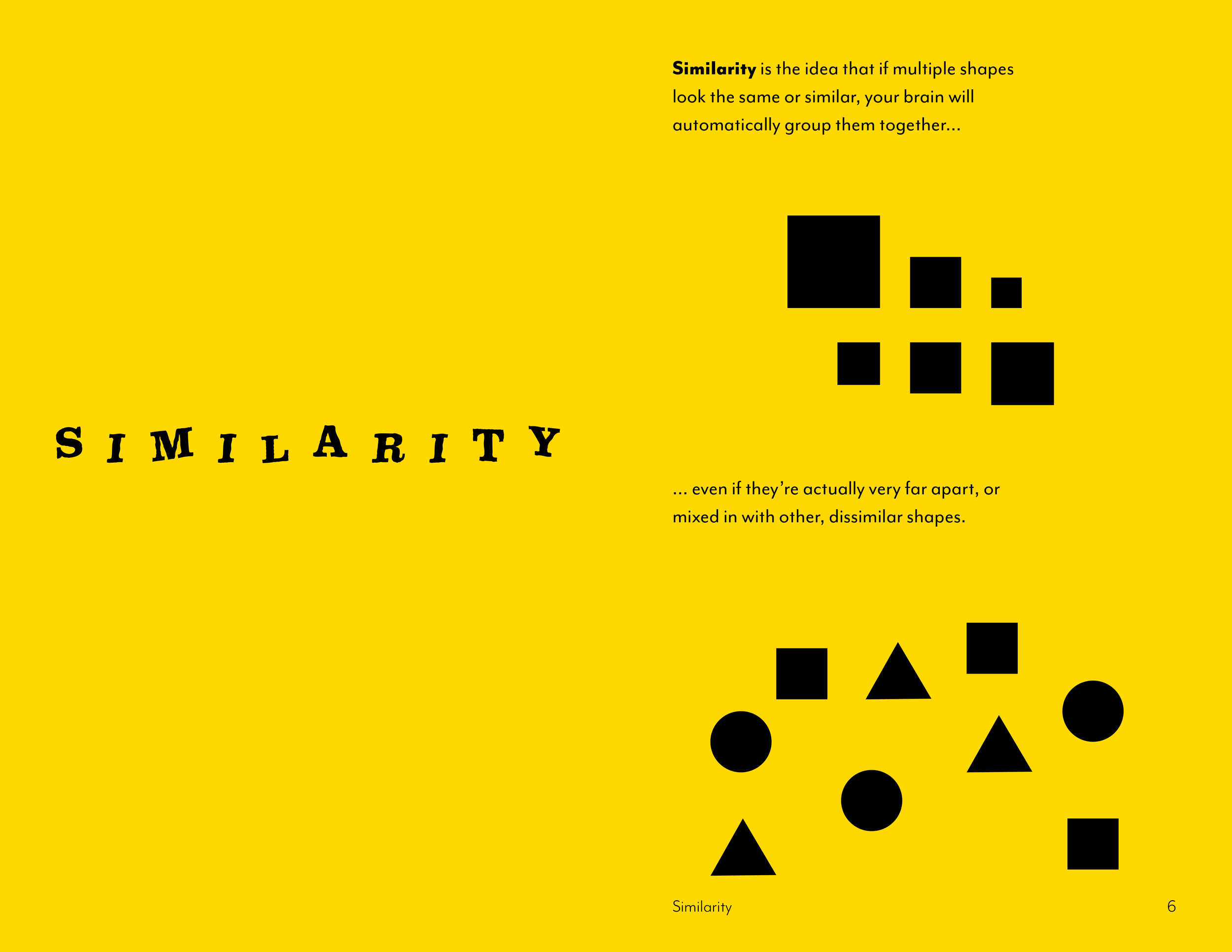
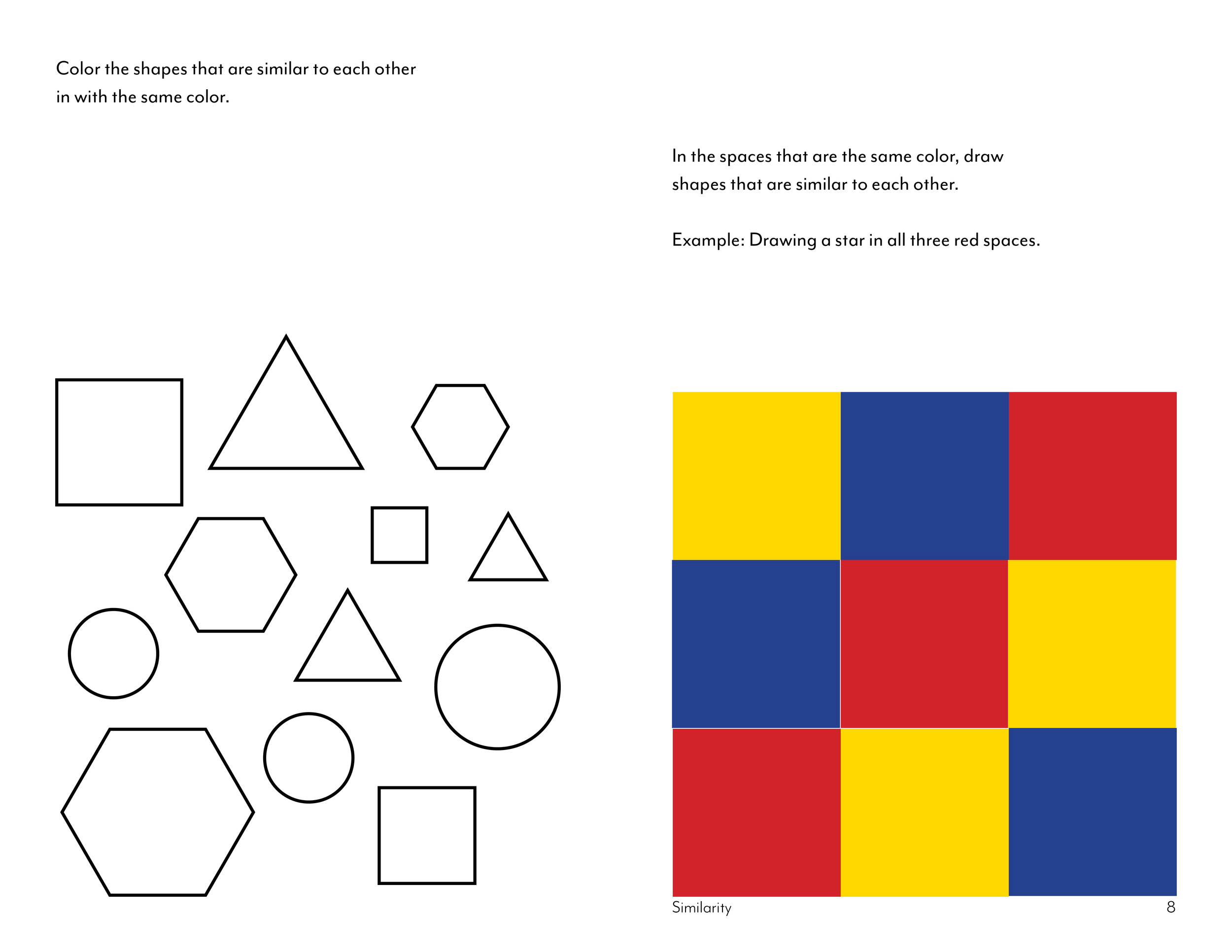
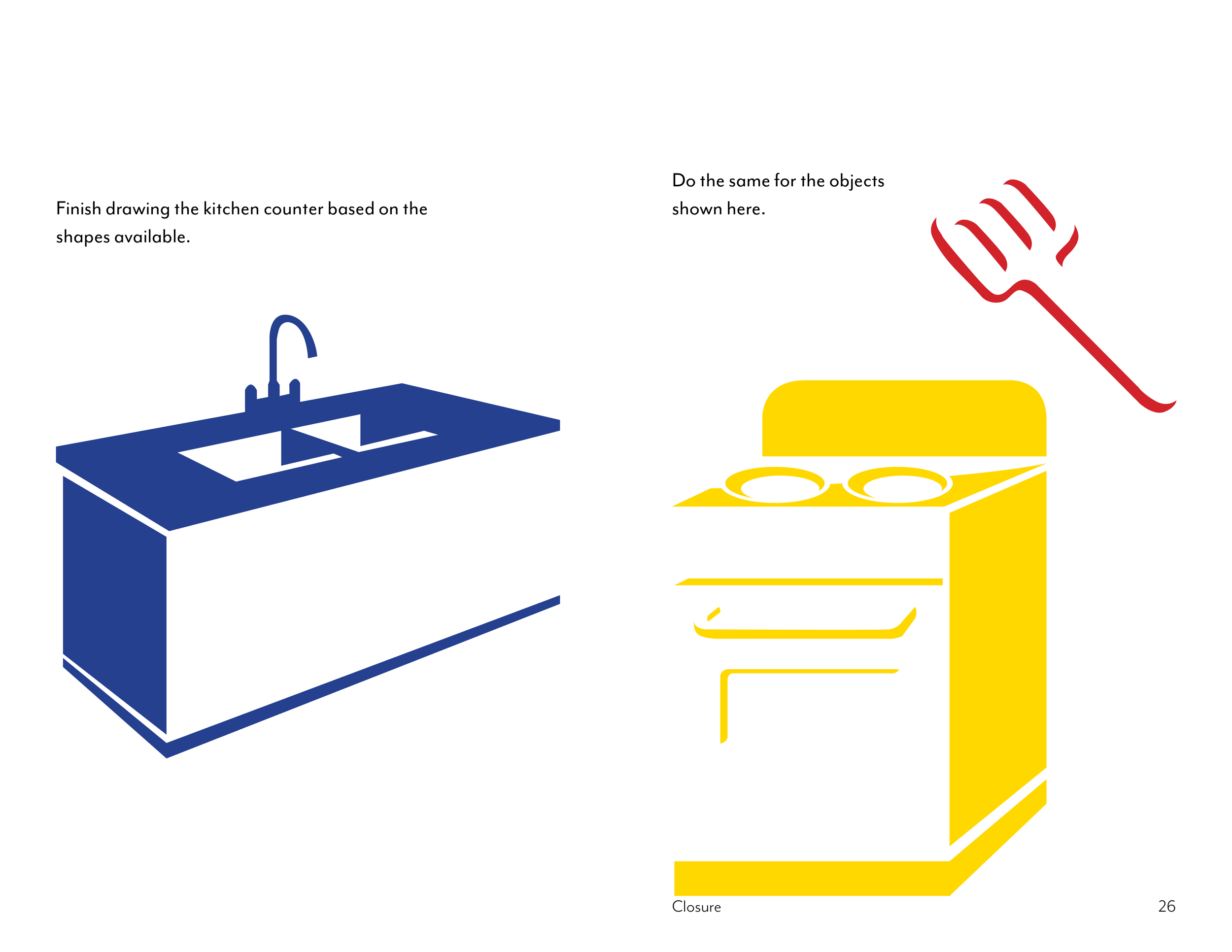
The crayons included in the package would be used to draw inside the book, for activities such as this one.